Have you ever thought about your own surname? Wondered about the stories behind them, especially if they are unusual?
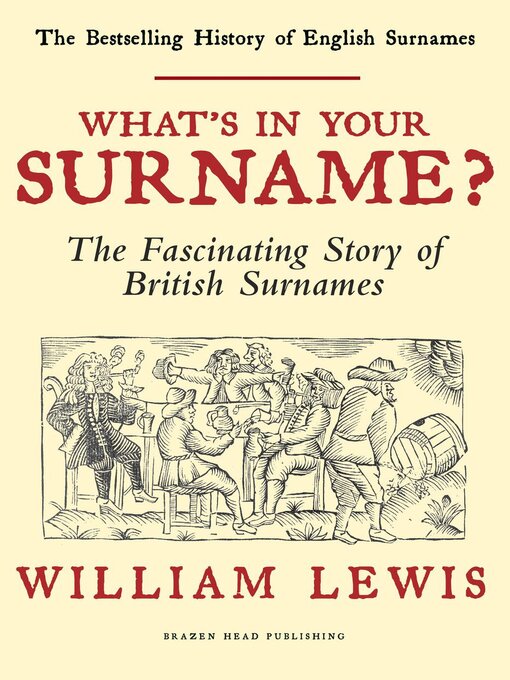
This Amazon NUMBER 1 BESTSELLING BOOK (Genealogy) tells the engaging story of when our surnames first came into use, why they were necessary and how people acquired them.
After spending decades writing and researching the history of names, William Lewis presents in 'What's in your Surname?' a journey through the quite diverse origins of English surnames citing hundreds of examples along the way. On this engaging journey you will discover the origin of last names, from disparaging nicknames to saints' names and how history has shaped the creation of and evolution of surnames.
There have been many books with surnames as their theme: dictionaries of surnames, books about unusual surnames, heraldry, researching family history and so forth, but very few look at British history solely through surnames.
From Baker, Barratt and Bell through to Belcher, Blanchflower and Bugg, William Lewis covers the history of commonplace and exotic surnames in equal measure.
A joy to read whether cover-to-cover or dipped into as a treasury of sources, 'What's in your Surname?' offers an engaging, vivid and revealing historical portrait of English surnames - and the unique and diverse places from whence they came.
Read 'What's in your Surname?' today to discover the fascinating origins of hundreds of English surnames . . .
-
Creators
-
Series
-
Publisher
-
Release date
November 30, 2018 -
Formats
-
OverDrive Read
- ISBN: 9781386847779
-
EPUB ebook
- ISBN: 9781386847779
- File size: 303 KB
-
-
subjects
-
Accessibility
-
Languages
- English
Why is availability limited?
×Availability can change throughout the month based on the library's budget. You can still place a hold on the title, and your hold will be automatically filled as soon as the title is available again.
The Kindle Book format for this title is not supported on:
×Read-along ebook
×The OverDrive Read format of this ebook has professional narration that plays while you read in your browser. Learn more here.